Clyde Cleveland: Author, Lecturer, Podcaster
About Clyde Cleveland
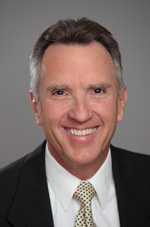 Clyde and his wife Debbie have been married for over 55 years. They have four children and eight grandchildren. For decades, he has split his time between his work in the financial services industry and his political activism.
Clyde is the author of "Common Sense; Revisited," which has sold over 60,000 copies and been read by thousands more. He is the co-author of "Restoring the Heart of America, a Return to Government by the People." He is also the co-author of "Flourish?" by Robert Podolski with Clyde Cleveland. All three books are available on Amazon.
He was the Libertarian candidate for Governor of Iowa in 2002. Clyde is currently the interim Chief Justice for the Republic of Florida. He has been a leader in the movement to restore our country to its founding principles. He has also been a leader in improving our environment as a board member of two successful non-profit environmental organizations.
Clyde was the CEO and co-founder of Impact Wealth Group and of IWG Advisors LLC, a registered financial advisory company. He was the co-founder and President of Randall Marketing Group (RMG). RMG started operations in 2005 and was a leader in training financial service agents.
In 2003, Mr. Cleveland co-founded Seminar Crowds, a direct-mail company specializing in mailings for financial agents, who offer complimentary dinner seminars to build their clientele. In 2002 and early 2003, Clyde operated a financial advisory business in Des Moines, Iowa.
In 1990, Clyde switched from his previous work in financial services to the Infomercial industry. He was directly responsible for developing the first two successful golf club infomercials ever produced.
Tim Hawthorne, Chairman, Hawthorne Direct; Co-Founder, Electronic Retailing Association, had this to say about Clyde's impact on the infomercial industry:
"Before the 'Putt to Win' and 'The Longest Drive' infomercials, no one thought that a golf club could sell through this mass marketing medium. Clyde proved the industry experts wrong. Twice. He has had a profound impact on the entire infomercial industry."
In 1981, Mr. Cleveland founded and served as President of United Investment Groups, Inc., which became one of the largest syndicators of privately offered research and development partnerships in the country. The common theme of each R&D partnership was a focus on environmentally friendly, socially conscious products. In conjunction with UIG, Clyde served as the General Partner of twenty-three limited partnerships, including real estate, research and development (R&D), and wind energy syndications.
In 1986, Conscious Investors, Ltd. named Clyde the "First Socially Conscious Venture Capitalist" at their international symposium on Conscious Investing in Estes Park, Colorado.
In 1975, Clyde joined La Jolla Investment Groups as a property manager. His responsibilities included managing the properties owned by LIG in California, including single-family residences, duplexes, and small apartment buildings. In 1978, he became President of the affiliated LIG real estate company, which purchased and sold all LIG's properties.
As broker and President of the company, Mr. Cleveland was responsible for managing over 40 licensed real estate agents. LIG, through its partnerships, purchased over $60 million of real estate in the Southwestern states from 1977 to 1983. Mr. Cleveland was responsible for the acquisition, management, and disposition of all properties held by the partnerships in which he was a general partner. He had real estate brokers' licenses in California, Texas, New Mexico, Arizona, and Iowa. In May 1979, Clyde initiated and completed the purchase of the Winrock Gardens 354-unit apartment building. A week later, an article appeared on the front page of the Albuquerque Journal.
The headline of the article was "Largest real estate transaction." The first paragraph stated that Dr. Alfred Lopez, 34, and Clyde J. Cleveland, 29, co-general partners, completed the purchase of the Winrock property from Winthrop Rockefeller, and it was the largest commercial real estate purchase in the history of the state of New Mexico.
Environmental Biography
Clyde first became interested in environmental issues in the late 1960's while a student at Indiana State University. His focus, at first, was government-oriented solutions to environmental issues. It didn't take long for him to realize the power of the individual in making changes. It also became apparent to him that one person, acting with persistence and passion, has the ability to make a big difference. It was this understanding that eventually led him to the concept he later named "environmental entrepreneurialism."
Clyde knew that after earning his degree he wanted to be involved in an effort that improved our environment. He found that opportunity with Atlantic Richfield Co. as an Automotive Ecologist. The position afforded him an opportunity to educate the public regarding an issue of great environmental importance: auto emissions. The job involved traveling the country, going to colleges and towns, testing carbon dioxide and hydrocarbon levels in cars for free, and then adjusting carburetors to reduce emission levels and increase gas mileage. While doing the testing, he educated the drivers about the environmental impact of keeping their car tuned properly. When the ARCO project ended he worked for non-profit organizations for several years that were dedicated to maximizing the full potential of each individual and again he found connections between his studies and the environment.
In 1978, with a growing family Clyde became the broker and president of a real estate company. After organizing 14 partnerships and purchasing dozens of properties, he followed his dream and launched his own company. He started United Investment Groups (UIG) in 1980 with the intention of practicing environmental entrepreneurship, but at this point all he knew was real estate. The first break came in 1981, when the company was asked to fund a research and development partnership for a Japanese language typewriter. UIG raised $1.5 million in 4 weeks. Clyde now had a clear vision of the direction he would take UIG. The company immediately started looking for transactions that involved research and development companies that were positively impacting the environment. They formed the following partnerships from 1982 to 1986:
- United Wind Industries was funded with $600,000. This partnership purchased windmills for a wind generation farm in Palm Desert, California.
- United Soil Technologies was funded with two partnerships, which raised a total of $6,000,000 in cash and long-term notes. This partnership funded a company called Soil Technologies in Fairfield, Iowa, which manufactured all natural cover crops for farmers, which contained various kinds of algae. The product had enormous ecological implications because the farmers were reporting a 95% reduction in chemical costs when using the product. They also reported increased yields and improved quality. The UIG sponsored partnership paid for the research and development necessary to increase the shelf life of the algae from 48 hours to 2 months. The R and D was successful and this company is still in business today. It is currently one of the leading companies supplying natural alternatives for all types of agricultural uses. Microp for golf courses is a product used by many of the nation's top golf courses.
- United Fibertech Lmtd. was funded with $2.8 million dollars, which was awarded to Tetratech Industries of Austin, Texas for the research and development phase. Tetratech had a process and a machine that could take any fibrous agricultural waste product, such as wheat straw, and create building materials that could be used to build homes or office buildings. The end product was amazingly strong, pest resistant and fireproof. The ecological implications were enormous. The waste product used for the building board was usually burned, increasing air pollution, so the process had an immediate impact on air quality by using the waste material in a productive manner. The product had the potential of significantly reducing the demand for lumber.. It was an all natural product for the home; no chemicals were used in its production. Many homes were built around the country with Tetra board, including the office buildings Clyde and his partner built in Fairfield, Iowa in 1983.
- United Magnetics Lmtd. UIG raised approximately $3 million dollars in venture capital in which funded Magnetics Research International. Their product was a highly innovative technology that made electric motors more ecological and energy efficient by using newly discovered principles of magnetism. The company operated as Magnetics Research International for 10 years and eventually sold its technology to a larger company.
- United Investment Groups raised $3.5 million for 3 additional companies during this period, all of which performed R and D for computer related innovations designed to increase productivity. It was in 1986 that an international organization called Conscious Investors Lmtd. invited Clyde to an international conference on socially conscious investing in Estes Park Co. They honored him with an award entitled "The First Socially Conscious Venture Capitalist" for his work with United Investment Groups.
A few years ago Clyde became very concerned about Genetically Engineered foods. He felt immediately that taking genes from one species and forcibly inserting them into the DNA of a completely different species was a bad idea. The more he researched it the more he was convinced that this was an extremely dangerous technology.
Clyde served on the board of directors of the Institute for safe technology started by Jeffrey Smith, the most recognized speaker and author on GMO foods in the world.
In 2012, in an effort to protect raw milk farmers from extreme harassment by the FDA, Clyde co-founded Free America Now (FAN), which helped Sheriff Richard Mack create the first ever Constitutional Sheriff Convention. By using a powerful non-coercive, non-hierarchical, consensus based organizational structure FAN, in just 3 months, raised over $130,000, recruited over 120 county sheriffs, and enlisted a highly qualified group of speakers to this unique, revolutionary, and highly successful event.
Affiliations:
Many years ago Clyde became very concerned about Genetically Engineered foods. He felt immediately that taking genes from one species and forcibly inserting them into the DNA of a different species was a bad idea. He became a stand-in speaker for Stephen Druker, the attorney who sued the FDA for the fraudulent approval of GMO food.
Mr. Druker's current book "Altered Genes, Twisted Truth" is quickly becoming a best seller as it exposes the truth about this world endangering technology.
Clyde served on the board of directors of the Institute for Responsible Technology (IRT) founded by Jeffrey Smith, the most recognized speaker and author on GMO issues.
Clyde served on the board of JFAN, one of the most effective organizations in the country educating the public on the dangers of confined hog operations.